Blog Archives
HB 170 – Current Version is MUCH better for our community….
“The Only Thing That Is Constant Is Change ” – Heraclitus
― That quote fits really well into the legislative process. HB 170 – the House version of the transportation bill, as introduced was very UNFRIENDLY to local governments. (Read my earlier post for full details). But city’s around the state complained to their respective representatives. Many cities and counties were passing resolutions asking their representatives to vote NO to House Bill 170. People were screaming, cussing, and complaining. But our representatives LISTENED to us, and the current version of this bill shows that.
As it stands now….
The House has made significant efforts to address the concerns expressed by local elected officials about the original bill’s impact on local revenues. HB 170 no longer includes language that would give a county governing sole authority to impose, or not impose, a 6¢ per gallon local excise tax. With the local excise tax option removed, so too is the local distribution formula based on DOT’s Local Maintenance & Improvement Grant (LMIG) program.
HB 170 as it passed the House Transportation Committee would do the following:
- beginning July 1, 2015, LOST, HOST and Atlanta’s MOST would no longer be collected on the sale of motor fuel;
- beginning July 1, 2015, the tax rate for LOST, HOST and MOST would be adjusted to 1.25% from the current 1% rate;
- current and future SPLOSTs and ESPLOSTs would continue to be imposed at a rate of 1%;
- current and future SPLOSTs and ESPLOSTs would continue to be collected on motor fuel except that diesel would no longer be taxed beginningJuly 1, 2015;
- for future SPLOSTs and EPLOSTS, any revenue collected from the sale of motor fuel would be required to be spent on transportation needs, which for cities and counties is defined broadly to include transit, rail and airports, and for schools includes the purchase of fuel and buses.
The House Transportation Committee version of HB 170 is a good faith attempt to make cities, counties and schools whole and to use current sales tax agreements for the distribution of revenue. While House leaders are looking for ways to reach the goal of making local governments whole in the aggregate, as with any significant change in what can be taxed as well as tax rates, some jurisdictions would see increases in tax revenue while others would experience a decrease.
In our community, the breakdown is as follows. (assuming future sales of motor fuels and other taxable products in our community remain somewhat stable with what 2014 saw).
LOST IMPACT:
City of Hawkinsville – Current = $421,455 Under HB170 = $444,800 (Net increase of $23,345)
County – Current =$421,455 Under HB170 = $444,800 (Net Increase of $23,345)
SPLOST IMPACT:
City of Hawkinsville – Current = $421,455 Under HB170 = $411,200 (Net decrease of $23,345)
County – Current =$421,455 Under HB170 = $411,200 (Net decrease of $23,345)
ESPLOST IMPACT
Pulaski County School System – Current = $842,911 Under HB170 = $822,400 (Net decrease of $20,510)
Total Community Impact is a net increase of revenue of a little over $5,600
Another benefit to us locally is that the GDOT is legally mandated to re-distribute at least 10% of its budget allocation for LOCAL improvements (know as LMIG – Local Maintenance and Improvement Grants. Last year the county received some $200,000 while the city received some $45,000 (to be matched 30%). Since the GDOT budget will rise SIGNIFICANTLY due to this HB170, our city and county should be receiving somewhere between a 50% and 100% increase in our LMIG allocations. This should result in many more miles of roads within our city that will be repaved during the 2016 fiscal year!
So, originally, the bill was BAD….. We complained as did others….. Our representatives listened and the current version of the bill is palatable.
Now lets wait and see what the Senate version of the bill looks like.
Shelly Berryhill
Hawkinsville City Commission
shelly@hawkinsvillega.net
Share this:

HB170 – Proposed Transportation Bill in the House
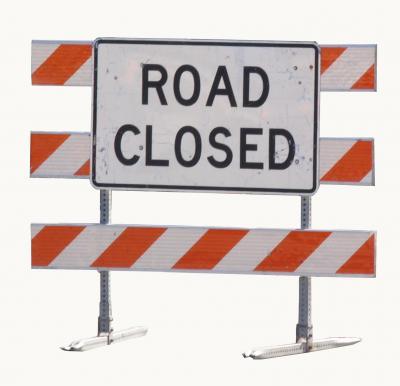 As of today (Valentine’s Day), HB170, the Transportation Bill is in the full transportation committee of the House. Basically, this bill is changing the current SALES tax on motor fuel (Gas & Diesel) to an excise tax. The advantage is that this will level out the fluctuating taxes raised by a sales tax which is dependent upon the price of gas which changes daily. By changing to an excise tax, which is charged PER GALLON rather than PER DOLLAR, it should level out the income received by the state. The trucking industry also receives larger tax benefits on an excise tax over a sales tax, so the trucking industry will see a huge benefit of this change. And we all want to help out industries in Georgia.
The State of Georgia is attempting to raise an additional $750 million + (annually) for the Georgia Department of Transportation (GDOT). However, THEY (our state elected officials) don’t want to “raise taxes.” So they are promoting this bill as a “revenue neutral” bill. Yeah, right! If they are bringing in an additional almost 1 BILLION dollars, it’s got to come from SOMEWHERE!
That somewhere apparently is going to be from your LOCAL governments (County, City, and School System). You see, our local governments currently receive 3 cents of every SALES TAX dollar raised. 1 cent goes to LOST (Local Option Sales Tax). 1 cent goes to SPLOST (Special Purpose Local Option Sales Tax). And 1 cent goes to ESPLOST (Educational Special Purpose Local Option Sales Tax).
When you remove MOTOR FUELS from these sales taxes, this 3 cents will disappear from the local coffers of your local governments. We will still receive LOST, SPLOST, and ESPLOST taxes, but not on Motor Fuel Sales. In Pulaski County, Motor Fuel sales account for almost 16% of the total sales taxes collected in Pulaski County. Therefore, your school system’s next ESPLOST will be reduced by almost 16% which will amount to a LOSS of income to the Pulaski County School system of approximately $131,410 per year. Constitutionally, the school system CAN receive sales taxes, but CANNOT receive excise taxes. And there are no plans by the state to supplement this loss. There are no plans by the state to help reduce expenses or other requirements. No, this will be a LOSS each and every year. ESPLOST is used for capital purchases (Buses, buildings, technology, etc.). Apparently, the state thinks the school can simply “absorb” this loss of income. No big deal. (yeah, right!).
The loss of the 1 cent on SPLOST will effect both the city and the county. Currently we have a negotiated agreement that we split SPLOST revenues 50/50. So this loss will effect each of us the same amount. SPLOST income currently amounts to about $842,911 per year. By removing Motor Fuels from the calculation, this number will reduce each year to $711,501. A loss of about $131,410 per year. This money is going away. So the county and the city will each face lower SPLOST revenue on the next SPLOST of almost $65,705 EACH! Like the school’s ESPLOST, SPLOST is used for capital expenditures like Road Equipment, Tractors, Recreation Department improvements, Sheriff Department Vehicles, etc. This loss of $131,409 per year amounts to a loss to the city and county of $788,460 on the next 6 year SPLOST! The tractors are STILL going to wear out. The deputies are STILL going to need vehicles. Water Meters are STILL going to go bad. Our option? We can only raise property taxes or fees to take care of the shortfall.
The loss of the 1 cents on LOST will also effect both the city and the county. Currently we have a negotiated agreement that we split LOST revenues 50/50. So this loss will effect each of us the same amount. LOST income ON MOTOR FUELS current amounts to about $393,690 per year. So this is ANOTHER $400K that the state is pulling away from local coffers.
BUT WAIT! NO WORRIES! The state is going to “come to our rescue.” They are going to “allow” the county to vote an additional 6 cents excise tax to be added to motor fuel in addition the the excise tax that the state is accessing. And to hear them talk, “that solves the problem.” But does it?
In Pulaski County, we sold 4,224,231 gallons of gas in fiscal year 2014. So the 6 cents would increase the COUNTY coffers by $253,454 each year. Now last time I used my calculator, $253,454 does not bring back the lose of $140K (in LOST dollars) and $131K (in SPLOST dollars) and $131K (in ESPLOST dollars). Nope, by my calculations when you combine the decreases in LOST, SPLOST, and ESPLOST, our citizens are being short changed by about $403,000 PER YEAR! And that is AFTER our sole commissioner implements the 6 cents excise tax. If he should choose NOT to implement this tax, then the citizens will lose some $650K per year. Thanks Legislators!
But wait! There’s more!
Even if our sole commissioner DOES implement the 6 cents of excise tax (taking the heat of a “tax increase” rather than the state taking that heat!), the STATE is telling us HOW he has to split it with the city. Previously, our LOST and SPLOST splits were NEGOTIATED LOCALLY. Now, they are giving us a formula based on road miles in the city/county and population in each. The result will be on both LOST AND SPLOST rather than splitting 50/50 as we have for years, the STATE is telling us the motor fuel excise tax will be split 73/27. The county will get 73% and the city will be reduced to 27%. OUCH!
SO…. Not only are they reducing our monies, but they are TELLING US how to split the reduced amount they plan on giving us!
Based on 2014 figures, and assuming the county DOES implement the 6 cents, then the COUNTY will still lose $78,000, the school system will lose $131,000, and the city will lose $194,000 PER YEAR! And this is AFTER the 6 cents excise tax which the county may or may not implement. “Revenue Neutral huh?”. The city will bear 48% of the reduction. The school system will bear 33% and the county 19%. To replace this money, the county could be forced to raise their millage by almost a half mill. The school system could be forced to raise their millage by almost half a mill. And the city (who is hit the hardest) could be faced with over a 2 mill increase. (and we haven’t raised the millage since 1987).
THERE’S EVEN MORE! With LOST, the revenues go into the general fund. Your elected leaders can spend this money how they see fit (and answer to their local constituents). With SPLOST and ESPLOST, while the money has to go to capital projects, your local officials decide (by voter referendum) the projects that our citizens need. But with the coming changes, all the money from the motor fuel EXCISE tax MUST be spend on Transportation. We will have no choice. The State again TELLING us how to spend our money!
Hope is not yet lost. The bill is still in committee. The final has not been seen. And then regardless of what the house comes up with, the State Senate will still have their input and revisions. So ultimately it might be better. It might be worse. No one knows at this point.
My fear is that the final version won’t be significantly different that I have presented. I encourage you to contact our local state representatives and tell them NOT to pass this bill in its current state. Do we need more transportation dollars in Georgia? Yes! Do we need to collect those dollars by pulling them from the local economy? No!
The alternatives are many. They can leave our local 3 cents sales tax on gas and go on about their merry way. Or they can convert the 3 cents to an excise tax but LET LOCAL ENTITIES decide how to spend and how to divide the money. They can simply ADD to the state’s portion of the excise tax and fund the transportation needs. But no, that would mean THEY would be seen as raising taxes rather than forcing us LOCALLY to raise taxes.
Representative Buddy Harden is Pulaski County’s legislature in the State House. Senator Ross Tolleson is our Senator. Please contact these gentlemen and tell them to fund the state needs from state coffers. Not by pulling money away from our local governments. Their contact information is below:
Buddy Harden
R-District 148
504-G Coverdell Legislative Office
Atlanta, Ga. 30334
404-656-0188
buddy.harden@house.ga.gov
Ross Tolleson
R-District 20
121-F State Capital
Atlanta, Ga. 30334
404-656-0081
ross.tolleson@senate.ga.gov
Please let me know your thoughts. Reply to this post or email me at shelly@hawkinsvillega.net
I look forward to hearing from you!
Shelly Berryhill
Hawkinsville City Commission
Share this:

Georgia Sales Tax Exemptions….
 During the 2012 legislative session, the General Assembly approved sweeping tax reform in H.B. 386. The bill had overwhelming bipartisan support in both Houses, passing with a 54-0 vote in the Senate and 155-9 in the House. Originating from a larger set of recommendations unveiled in January 2011 by the Special Council on Tax Reform and Fairness, the tax reform package included a number of provisions that impact our community. Among the provisions: a new motor vehicle title fee (TAVT) to replace the ad valorem tax on automobiles; elimination of the sales tax on automobile purchases; elimination of the sales tax imposed on energy used in manufacturing; and broadening of exemptions for the agriculture industry including energy, equipment, and business inputs such as seed, fertilizers, feed, etc. The reduction of sales tax revenues is no surprise as the state fiscal analysis of H.B. 386 prepared prior to passage of the bill projected that elimination of sales tax on automobiles and the included sales tax exemptions would cost local communities $199.6 million from 2013 to 2015; however, the fiscal analysis could not have predicted that these losses would be unevenly distributed across the state, a fact which is evident now that the exemptions have been in place for 19 months.
The approval of H.B. 386 followed years of study and recommendations aimed at comprehensive tax reform. In 2012, Georgia, like most other states, was just beginning to emerge from the “Great Recession” and state leaders were eager to find ways to help Georgia compete for jobs and encourage economic development. The intended purpose of the exemptions included in H.B. 386 was to support some of Georgia’s most critical industries, including agriculture and manufacturing. However, since the provisions of H.B. 386 have been in place, it has become evident that there are unintended consequences of the bill that are having a significant impact on local government revenues since the law
went into effect in 2013.
Overview
Sales taxes are a primary source of revenue for Hawkinsville to provide critical services that protect the health and safety of our residents and maintain a vibrant quality of life for all taxpayers. SPLOST and ESPLOST have been approved by voters throughout the state as a means of funding capital projects for local governments and school systems. Since 2001, approximately 95% of SPLOST referenda have been approved by the voters. Every sales tax exemption whittles away at local revenues, even as costs to provide services and demand for services increase. Exemptions that are put in place after
approval of a SPLOST, ESPLOST, or bond referenda erode the revenues available to complete capital projects and to pay off debt.
The Georgia Municipal Association has collected data on sales tax distributions to all of Georgia’s 159 counties and 538 cities during a 19-month period from February 2012 to September 2014. Sales tax distribution data was obtained from the Georgia Department of Revenue website, and includes distributions of LOST, SPLOST, ESPLOST, MOST (City of Atlanta), HOST and MARTA sales taxes.
The picture above illustrates the percent change in sales tax distributions immediately PRIOR to the enactment of the exemptions to the period following implementation of the exemptions. Areas shaded in green have experienced increased distribution during these time frames; areas shaded in red have experienced decreased distributions.
Conclusions
As the maps indicate, a comparison of distributions from 2012 to 2013 (and beyond) shows:
– an immediate and disparate impact from region to region;
– as a direct result of the exemptions included in the 2012 tax reform package, areas of the state with a large agricultural industry base show a greater decline in sales tax revenues than areas with greater diversity of industry; and
– rural areas have seen greater reductions than urban and suburban counties in Georgia.
Pulaski County has seen sales tax reductions from -10% to -15% due to these changes in the law. This effects our LOST (Local Option Sales Tax – which we split 50/50 with the County), and SPLOST (Special Purpose Local Option Sales Tax – used to fund capital projects) and it also effects ESPLOST (Education Special Purpose Local Option Sales Tax – which goes to our school system, not the city). Hawkinsville is working hard to meet service demands, maintain infrastructure, and provide essential services, while cutting departmental budgets.
We need to take a hard look at what exemptions are WORKING to bring industry to our state and what exemptions are due to lobbying efforts by well-funded special interest groups!
Share this:

Consolidation continues? Zoning Boards to merge

Well, the citizens decided against consolidating Hawkinsville and Pulaski County governments. However, that is not stopping the respective governments from continuing to work together to consolidate services whenever it makes sense. We are now working with County Commissioner M.A. “Butch” Hall to consolidate the zoning ordinances and zoning boards of Hawkinsville and Pulaski County.
We will utilize ONE set of zoning ordinances, ONE county wide zoning map, and ONE zoning board to hear zoning requests. This move will not only save a little money (we pay our zoning board members AND the county pays their zoning board members), but it will also make things more consistent and easier for our citizens. A citizen can get the maps, forms, ordinances, etc from EITHER government.
We will continue to look for ways to make our respective governments more responsive, better fiscal stewards, and better listeners to our citizens. If you have any input on this or any issue, please respond below. I look forward to your thoughts….
Share this:

“I’m from the Government and I am here to help you”
“I’m from the Government and I am here to help you.” If that does not strike you with fear, then you are different from most of us. As a general rule, the government adds layers of bureaucracy and rules and regulations and seldom “helps” us achieve much. Typically we are all better off if we can “help ourselves.”
Our little community of Hawkinsville is celebrating. Madison Conner, a 15 year old runaway, has been found and is safe. While I write this, her parents are on their way to pick up their daughter. And this celebrating has many in our community talking about “What can we do for our young people?” It a discussion that is held often by all segments of our population.
Although I indicated that the government seldom helps, I did want to take a moment to reflect on some ways / ideas / thoughts that are both government and private that involve this concept of “What can we do for our young people?”
GOVERNMENT: The City/County together contribute over $150,000 / year toward our local Recreation program. We have an awesome rec program serving over 300 children in our community. We have great facilities enhanced in recent years through SPLOST (Special Purpose Local Option Sales Tax) and more facilities being planned and built now. I realize that this program does not and can not serve everyone and the location of the facilities is less than optimum, but it is a resource and it DOES serve hundreds of children in a very positive way.
We also have James Colson Park located off of 6th street. You can drive by most any time and see hundreds of children, youth and adults “hanging out” at Colson Park. The city has recently been awarded a grant that will allow us to add some playground equipment at this park.
We are in the process of applying for state grant funds that will allow us to build a skateboard park in Hawkinsville. We plan on adding this park to some donated land right next to the PHP building on Highway 341 North. Our Youth have recently signed petitions with over 700 names in support of this park. If all goes as planned, 2014 might see this facility built with little or no local tax dollars involved.
The City and County both have recently enhanced their river walk areas. Again, while not devoted to “Youth”, these river walk areas will serve all people while catering to FAMILIES.
Our local 4H club is bustling with activity.
The city is a major supporter of our local Arts Council. While some will argue that the concerts provided are more focused on adults and out of the price range of our youth, I have to mention that efforts ARE made through the Arts Council to bring in events that are youth focused. The Arts Council hosts yearly events that are field trips from the schools dealing with the performing arts. The local Talent Show is held yearly showcasing local and mostly young musical artists. Recently, a country singer (Gannon Adams) was brought in and performed for Free at the school system and then offered a relatively inexpensive concert at the Opera House.
The City helps sponsor local festivals such as the Harness Festival and the Harvest Festival. While only a few times a year, they do add to the mix of “What is there to do in Hawkinsville?”
We have a locally run “Family Connections” office in Hawkinsville. This state grant funded office provides many functions to our families in Pulaski County. From a mentoring program to yearly events such as the upcoming “Reality Check” (a budget and planning real life scenario that all area High School students will attend March 27th.) and “Teen Maze” which helps our youth understand that their decisions will have consequences. Last years Teen Maze was a huge success with over 700 teens going through the maze that was run by over 200 community volunteers. Family Connections also helps with Parenting Seminars and other events all with our TEENS in mind.
Our Police Department for years has sponsored an annual Fishing Rodeo.
The Archway Partnership (a public/private funded entity) that has helped with the local “Hoops League”. This is a basketball league for our youth that focuses on so much more than basketball. Life skills are a priority and this has been extremely well received in our community. Archway is also helping us to investigate the option of having a “Boys and Girls Club” started in our community.
Our local school system allows many clubs and groups to meet and promote within the school. There are enough extra-curricular activities to please most of our youth if they would only choose to participate.
I know there is more. The “Government” is actually trying to help this situation. But it of course takes more than government….
PRIVATE EFFORTS:
PHP (People Helping People) is a private group that is also focusing on our Youth. They have recently purchased a large building out on Highway 341 and have been sponsoring Youth concerts and other youth focused events. This group also purchased the old Hospital and brought us the Haunted Hospital last October. Pool Tables, Foos Ball Tables, Table Tennis and other activities are readily available. An indoor batting cage is even being built there. (and our new skateboard park land is being donated by this group). Instead of trying to re-invent the wheel, our community needs to get behind this group and help promote, push, and enhance these efforts.
CHURCHES in our area provide LOTS of activities for our Youth. From local gatherings to annual mission trips, our churches are a fundamental (and under utilized) source for GOOD for our youth. Our churches also sponsor “5th Quarters” which are gathering events staged after home football games.
COMMERCIAL ENTITIES: Recently Ga WebServices and ComSouth partnered to bring Willie Raines to our community. Willie puts on “Bullying Seminars” and did a live event at the local High School. Our local Businesses are willing to help for worthwhile causes.
PEOPLE: I often hear of a family that “invites everyone in”. They welcome their children and their friends into their homes, thus providing a safe environment in which to “Hang Out.”
CONCLUSION:
I applaud these recent discussions about “What can we do for our youth?”. This post is simply meant to encourage us to not overlook what we already are striving to do. Let’s build on our positives and correct our negatives. Let’s make the focus on the YOUTH and not our individual difference of opinions. It’s not about MY idea winning or YOUR idea winning. It’s about developing locals and activities that will help reach ALL of our community’s youth and keep them safe and entertained. We’ll never have all the answers. We’ll never reach all the youth. But those are never good reasons not to do the best that we can!
What are YOUR thoughts?
Shelly
Share this:

Consolidation Update
The consolidation bill passed the House yesterday. As far as I can tell there were no changes to the charter as was presented.
The following link will take you to the House site that describes the actions. Our next step is the Department of Justice.
http://www.legis.ga.gov/Legislation/en-US/display/20132014/HB/286
Share this:
City / County Consolidation
There are many citizens that have expressed an interest in the city and county governments consolidating into one entity. This was previously tried in 1999 but the county citizens voted the proposal down. It passed in the city but lost in EVERY precinct in the county. In this post, I am going to try to detail some thoughts, concerns, and suggestions on consolidation.
Personally, I have not made up my mind. I see some benefits and some concerns with this proposal. I will attempt to break down both my concerns and the potential benefits in this post.
Benefit: SIZE Since we are only 4,000+ in the city and 8,000+ in the county (excluding the city), it probably makes since for a community our size to consolidate. There is no need to fight over resources when there are so few resources to go around. I can see an advantage when applying for grants or when presenting ourselves to a potential industry when we can present ourselves as 12,000 strong rather than 4,000 strong. For example, when we apply with DCA for a grant, one of the “blanks” is how many people will this impact. Indicating 12,000 rather than 4,000 has got to carry weight.
Benefit: Cooperation Again, when presenting ourselves to potential industries, I think consolidation will show a spirit of cooperation that would please a prospect. And, although the city and county currently get along fabulously, there is no guarantee in the future if this will be the case. We all hear of communities (read MACON) that continually fight over LOST (Local Option Sales Tax), SPLOST (Special Purpose Local Option Sales Tax), and other shared revenues. They also continually bicker over shared expenses. Read the rest of this entry


 Shelly Berryhill