Blog Archives
Georgia Sales Tax Exemptions….
 During the 2012 legislative session, the General Assembly approved sweeping tax reform in H.B. 386. The bill had overwhelming bipartisan support in both Houses, passing with a 54-0 vote in the Senate and 155-9 in the House. Originating from a larger set of recommendations unveiled in January 2011 by the Special Council on Tax Reform and Fairness, the tax reform package included a number of provisions that impact our community. Among the provisions: a new motor vehicle title fee (TAVT) to replace the ad valorem tax on automobiles; elimination of the sales tax on automobile purchases; elimination of the sales tax imposed on energy used in manufacturing; and broadening of exemptions for the agriculture industry including energy, equipment, and business inputs such as seed, fertilizers, feed, etc. The reduction of sales tax revenues is no surprise as the state fiscal analysis of H.B. 386 prepared prior to passage of the bill projected that elimination of sales tax on automobiles and the included sales tax exemptions would cost local communities $199.6 million from 2013 to 2015; however, the fiscal analysis could not have predicted that these losses would be unevenly distributed across the state, a fact which is evident now that the exemptions have been in place for 19 months.
The approval of H.B. 386 followed years of study and recommendations aimed at comprehensive tax reform. In 2012, Georgia, like most other states, was just beginning to emerge from the “Great Recession” and state leaders were eager to find ways to help Georgia compete for jobs and encourage economic development. The intended purpose of the exemptions included in H.B. 386 was to support some of Georgia’s most critical industries, including agriculture and manufacturing. However, since the provisions of H.B. 386 have been in place, it has become evident that there are unintended consequences of the bill that are having a significant impact on local government revenues since the law
went into effect in 2013.
Overview
Sales taxes are a primary source of revenue for Hawkinsville to provide critical services that protect the health and safety of our residents and maintain a vibrant quality of life for all taxpayers. SPLOST and ESPLOST have been approved by voters throughout the state as a means of funding capital projects for local governments and school systems. Since 2001, approximately 95% of SPLOST referenda have been approved by the voters. Every sales tax exemption whittles away at local revenues, even as costs to provide services and demand for services increase. Exemptions that are put in place after
approval of a SPLOST, ESPLOST, or bond referenda erode the revenues available to complete capital projects and to pay off debt.
The Georgia Municipal Association has collected data on sales tax distributions to all of Georgia’s 159 counties and 538 cities during a 19-month period from February 2012 to September 2014. Sales tax distribution data was obtained from the Georgia Department of Revenue website, and includes distributions of LOST, SPLOST, ESPLOST, MOST (City of Atlanta), HOST and MARTA sales taxes.
The picture above illustrates the percent change in sales tax distributions immediately PRIOR to the enactment of the exemptions to the period following implementation of the exemptions. Areas shaded in green have experienced increased distribution during these time frames; areas shaded in red have experienced decreased distributions.
Conclusions
As the maps indicate, a comparison of distributions from 2012 to 2013 (and beyond) shows:
– an immediate and disparate impact from region to region;
– as a direct result of the exemptions included in the 2012 tax reform package, areas of the state with a large agricultural industry base show a greater decline in sales tax revenues than areas with greater diversity of industry; and
– rural areas have seen greater reductions than urban and suburban counties in Georgia.
Pulaski County has seen sales tax reductions from -10% to -15% due to these changes in the law. This effects our LOST (Local Option Sales Tax – which we split 50/50 with the County), and SPLOST (Special Purpose Local Option Sales Tax – used to fund capital projects) and it also effects ESPLOST (Education Special Purpose Local Option Sales Tax – which goes to our school system, not the city). Hawkinsville is working hard to meet service demands, maintain infrastructure, and provide essential services, while cutting departmental budgets.
We need to take a hard look at what exemptions are WORKING to bring industry to our state and what exemptions are due to lobbying efforts by well-funded special interest groups!
Share this:

Pot Holes and Paving……

I have had more than the normal phone calls lately over some bad roads in Hawkinsville. Almost all of the conversations start like this…
Citizen: “The city needs to come out and repave the road in front of my house. It’s in bad shape and me and my neighbors pay our taxes and deserve better roads.”
Let me just start out by saying, “They are right!”. However, it is not as easy as just sending out a crew.. For starters, the City of Hawkinsville does not have a paving machine or paving crew. Our guys can certainly fix a pothole or repair a road cut. But we don’t have the resources to actually pave or even resurface a road. In order to do that, we rely on the state Department of Transportation (GDOT). GDOT allocates so much money to us each year to use toward resurfacing. In 2014 that amount was $48,719.74. We are required to do a 30% match, so that means we have $63,336 allocated toward resurfacing in 2014. We then submit a list of roads (in priority order) that we feel need resurfacing. The top 15 list we submitted for 2014 was:
| Name | Start | End | Distance | Width | |
| 1 | Markel St. | Martin St. | Lakeview Rd. | 1753 | 20 |
| 2 | Hillcrest Ave. | McCormick Ave | end of street (Clark Dr) | 1409 | 20 |
| 3 | Jordan Drive | Sunnybrook Circle | Sunnybrook Circle | ||
| 4 | W. McDuffie St. | McCormick Ave. | Brookside | 682 | 22 |
| 5 | Ryan St. | Broad St. | Commerce St. | ||
| 6 | S. Union St. | Broad St. | Carruthers St. | 3646 | 20 |
| 7 | Kibbee | Turner St. | Jackson St. | 2447 | 25 |
| 8 | Second Street | Progress Ave. | Houston St. | 2535 | 37 |
| 9 | Liberty St | S. Florida Ave. | Warren St. | 2419 | 30 |
| 10 | Clark Dr. | Hillcrest Dr. | Kamellia Dr. | 1223 | 19 |
| 11 | Fairgrounds Rd. | S. Jackson St. | County Landing Rd. | 2100 | 17 |
| 12 | Wildwood Ave | Mansfield Dr. | Craftway Cir. | 2432 | 20 |
| 13 | Craftway Cir. | Wildwood Ave. | Thompson Way | 1314 | 20 |
| 14 | South Wood St. | Broad Street | Commerce Street | ||
| 15 | Pineywood Drive | Knotty Pine St. | end of street |
(This list is compiled from our street department as well as citizen complaints and then prioritized by the City Administration and the City Commissioners).
It costs us an estimated average of $0.56 per square foot to resurface (some more, some less depending on current road conditions and other factors). So once we find out how much money the state is going to allocate for us, then we have to re-prioritize our list to see that we get the most bang for our buck. We have to consider such questions as: Do we pave ONE long road, or several smaller roads, even if the long road is in worse condition? How many citizens actually live on that road? Is it a thoroughfare to other areas? Can we temporarily patch it and get by another year?
For 2014, we ending up having enough funds to do:
| 1 | Markel St. | Martin St. | Lakeview Rd. | 1753 | 20 |
| 2 | Hillcrest Ave. | McCormick Ave | end of street (Clark Dr) | 1409 | 20 |
| 3 | Jordan Drive | Sunnybrook Circle | Sunnybrook Circle | ||
| 4 | W. McDuffie St. | McCormick Ave. | Brookside | 682 | 22 |
It is estimated that it will cost the city (and GDOT) $66,000 to complete these projects.
In order to complete any additional roads, they would have to be paid for 100% by our local tax dollars. By waiting on each years GDOT allocation, we get much more for our local dollars (with the state contributing 70% of our cost). While we know there are other roads that need paving, we also have many other infrastructure needs to pay for as well. And on the other infrastructure needs, the state gives us no help. Thus the local taxpayers have to pay 100% of the other costs. So it makes more sense to only pave the roads each year that GDOT will help us with and put our other limited resources toward the other infrastructure needs. If we DON’T do at least the amount that GDOT approves, they will not pay ANY! So we need to at least do enough roads each year in order to get their 70% contribution. Anything OVER our total, we would have to pay 100% for.
I was sitting at McDonald’s the other day with one of the “coffee clubs” that meet there. They took the opportunity to tell me of all the needs in the city of Hawkinsville. For example, they want us to fix all the roads, replace all the old water and sewage lines, and invest heavily in industrial recruitment (among other things). But most importantly, don’t raise taxes. In other words, their request was to correct outstanding problems (aka spending money) while not raising taxes (aka increasing revenue). An impossibility. We operate under a TIGHT, LEAN budget. So in order to do any additional work each year (pave additional roads, replace additional pipes, etc.) would require MORE revenue (aka higher taxes).
So, I am writing this post to assure you, our citizens, that we are doing our very best to correctly, efficiently, and effectively allocate the limited resources that we have. Do we have bad roads? YES. Can we afford to simply repair/resurface them all now? NO. We simply take our list each year, (again, compiled from our street department and citizen complaints) and prioritize and fund based on the dollar amounts that GDOT allocates to Hawkinsville each year.
If you know of a bad street, let us know. Our crews have spent the last two weeks repairing MANY of the potholes around town, but I am positive there are more. Call City Hall (478-892-3240) or simply email City Hall (cityhall@hawkinsvillega.net) or you can even reply to this post. We will look at the road, add it to our list, and then consider it when we re-prioritize each year.
Pot holes and patches? YES, we can do those ourselves, so again, LET US KNOW. Sometimes, the worse the condition, the LESS people report it. I suppose they feel that “surely someone has told the city how bad this pothole is.” But if everyone is thinking someone else is reporting it… well,… sometimes NO ONE reports it. Also, not all roads are city maintained. Some are STATE roads, and some that get reported are actually COUNTY roads. But let us know and we will pass along the information to the appropriate agency or government.
Thoughts?
Share this:

Consolidation continues? Zoning Boards to merge

Well, the citizens decided against consolidating Hawkinsville and Pulaski County governments. However, that is not stopping the respective governments from continuing to work together to consolidate services whenever it makes sense. We are now working with County Commissioner M.A. “Butch” Hall to consolidate the zoning ordinances and zoning boards of Hawkinsville and Pulaski County.
We will utilize ONE set of zoning ordinances, ONE county wide zoning map, and ONE zoning board to hear zoning requests. This move will not only save a little money (we pay our zoning board members AND the county pays their zoning board members), but it will also make things more consistent and easier for our citizens. A citizen can get the maps, forms, ordinances, etc from EITHER government.
We will continue to look for ways to make our respective governments more responsive, better fiscal stewards, and better listeners to our citizens. If you have any input on this or any issue, please respond below. I look forward to your thoughts….
Share this:

Speed Bumps – A bumpy road indeed…
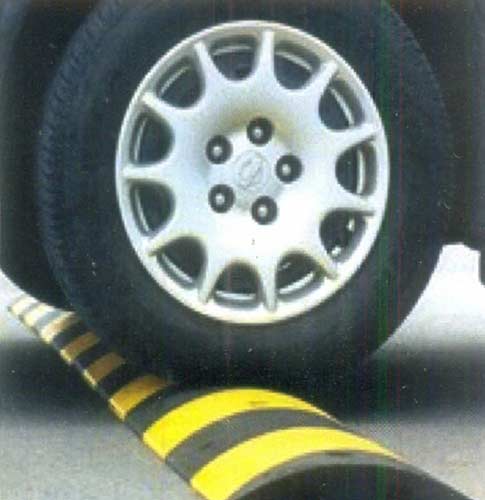 Personally, I hate speed bumps. They are aggravating and bad for the car. They cost money. I would much rather see law enforcement write tickets, thus CREATING revenue, than us spending money to place speed bumps.
Having said that, I do understand why a parent of small children would request one. As they see cars speeding down their road, they know that at that speed, reaction time would be limited. For the safety of their children and pets, they want cars to slow down. Speed bumps DO accomplish that.
During my tenure on City Council, I have voted against almost all speed bumps that have been presented to us. I have only voted affirmative for two. The first one was a request by First Baptist Church of Hawkinsville. They owned both sides of the street and children were often running to their parent’s vehicles after meeting times. This one made sense to me.
The second one was requested by a mother on a busy street. She had gotten almost all her neighbors to agree. So I voted for it.
One that I voted against was requested by a good friend of mine. He called and requested it right in front of his house. I told him of my disdain for them, but I also correctly informed him that if it was brought up, it would probably pass. He asked me to bring it up. So… I made the motion to place a speed bump in front of his house. The motion was seconded and then I voted against it. That got a few strange looks. Why would I make the motion and then vote against it? Simple: A citizen had a request and it was worthy of discussion and a vote. But even after bringing it up, my disdain for them remained so I voted against it. It passed 4 to 1.
Subsequently, we have had more drama with speed bumps. So in November of 2013, I made the following motion:
“Any time a citizen requests a speed bump, the city will place a radar detection unit on that street. This radar detection system will record the number and speed of all traffic on that street for a period of at least two weeks. This will allow us to see if there truly is a need. Does the traffic warrant it? Are cars speeding down the road? Then one of two things will take place. If the homeowner lives in a section that has a homeowner’s association, we will require that the homeowners association take a vote and submit that vote to us. If the homeowner does NOT live in a section that has a homeowner’s association, the city will poll every household that lives on that street from stop sign to stop sign and determine the neighborhood’s feel for having a speed bump placed on their street. All of the above information will then be presented at the next regularly scheduled city commission meeting, where a vote will be taken.”
The motion was passed. Hopefully this will place a little more accountability on the process.
What are your thoughts on speed bumps? Do they work? Are they worthwhile? What alternatives would you suggest? I represent the citizens of Hawkinsville, so knowing your thoughts on these issues will help me decide how to vote. While speed bumps are not the most important decisions that we make, they do effect our lives DAILY as we have to drive over them. They merit discussion. Tell me YOUR opinion!
Share this:

Consolidation: My 2 cents after the election…

Now that the election is over, let me share my thoughts on the consolidation issue here in Hawkinsville / Pulaski County. I really did not want to say much prior to the election. Whatever I said, (or say now probably) would have been construed by the pro-side as being against consolidation and would have been construed by the con-side as being for consolidation. As a sitting official, I really felt that I should remain neutral. I think the citizens of this county should have whatever form of government that they want – therefore, I voted to allow the citizens to vote in the Nov. 5th referendum to decide that question.
Ironically, now that the election is over, I am probably getting asked more about it than before the election.
First, let me clear up (or attempt to) the confusion about – “City people got to vote twice”. There were two completely separate elections taking place. The city residents had to decide if they were in favor or not in favor of consolidation. The county residents (which is everyone that lives in Pulaski including those within the city limits) also had to decide if they were in favor or not in favor. So if you live in the city, it was not exactly that you voted twice in one election, but you voted once each in two different elections. Whether you agree or disagree that is how the Secretary of State’s Office told us to do the election. The Secretary of State guy quoted as saying it was illegal was probably simply asked if it was legal to vote twice in an election. This is the same way the vote was done in 1999 as well. A good analogy is this: if COKE and PEPSI were going to merge, and you owned stock in BOTH (city AND county resident), then you would get to vote in the COKE election and the PEPSI election.
When this issue first came up of the consolidation, I was certainly not going to stand in the way, because again, I feel the citizens should have whatever form of government that they want. However, if we were going to go down that road, I wanted it done right. So we (city and county governments) appointed a 16 person study committee to look into this idea. We had young, we had old. We had white, we had black. We had men, we had women. We had business people, we had farmers. We had a great cross representation of people on this committee. We then provided them the resources necessary to fully explore this issue. The city/county accountant attended those meetings. The city attorney attended those meetings. City/County personnel attended those meetings. City/County officials attended those meetings when asked. We had the Regional Commission out of Macon facilitate the meetings. GMA (Georgia Municipal Association) and ACCG (Association of County Commissioners of Georgia) attended many of the meetings. The group was tasked with exploring the avenues, the good, the bad, the financial, the personnel, etc. etc of this issue and to report back to the governments if they would recommend we pursue a consolidated government or not. This group met for over a year. They finally concluded that the majority of the group felt that we SHOULD pursue the consolidation. So both the city and county governments then changed the group from a study committee to a charter commission. They were to formulate the recommended “look and feel” of the new proposed government that would govern the consolidated “Hawkinsville / Pulaski County’. They wrote the charter which defined things such as the number of commissioners, their terms, the rotation, the pay. They came up with the proposed districts, and all the other items that had to be addressed. The proposed charter was then sent back to the local governments, where they were deemed appropriate and the charter was then sent to the Georgia State Assembly for approval. After they approved, and the Governor signed it, it was then placed on the ballot for the November 5th election.
As with any issue there are pros and cons. As with many issues there are disagreements as to the assumptions made. The pro-side was proclaiming that the consolidation would save lots and lots of money. My personal belief is that it could have saved some money over time. Not a whole lot, but some. Economies of scale and increased efficiency were sure to happen. However, at the same time, the merger itself would have been expensive. Simply merging the two general ledgers and accounting systems would probably not have been cheap. Long term, we would be managing ONE accounting system rather than two, but short term, we have to create the system to do it. We have ALREADY functionally consolidated many departments with the County, so much of the savings of a consolidated government have ALREADY been realized. 911, EMA, FIRE, POLICE, ANIMAL CONTROL, TAX COLLECTIONS, ECONOMIC DEVELOPMENT, RECREATION DEPARTMENT, BUILDING AND CODES ENFORCEMENT have all been functionally consolidated with the county over the last 10+ years.
I think a positive would have been that we could project ourselves as larger. When a potential industrial prospect inquired as to the size of our city, we could report 12,000 rather than 4,000.
A positive would have been some reduced bureaucracy on items that previously would have had to obtain both city and county approval. However, for items requiring JUST county approval, you would have had to convince 3 of the 5 county commissioners rather than the current sole commissioner.
For many people that do not like that we have a SOLE county commissioner, a board of 5 was more appealing.
Some on the con-side were proclaiming that suddenly the county would have to conform to city ordinances or pay city taxes. That was not accurate. All ordinances applying NOW to the county would have remained to the county, while all ordinances applying just to city residences would have remained applying just to city residences. All city taxes collected would have remained in the city. The county was NOT suddenly going to have to pay city taxes. Their dirt roads were NOT going to suddenly be paved, and they were NOT going to suddenly have the option of utilizing city services such as water or trash pickup.
I think consolidation would have removed one barrier to city annexation. NOW, we must not only have the proposed properties’ owner’s approval, but we must also have approval from the county. I suppose since the consolidated board would have represented both city and county, the county approval would not have been necessary. Depending on how you feel about the possibility of annexation, this could be either a pro or a con for consolidation.
On the negative side, I like the fact that we are all (city and county officials) elected at-large. I like that I feel I get to represent ALL of the residents of Hawkinsville, and not just my little “district.”. I also like the fact that the way it is now, 100% of the people voting on city taxes are required to LIVE within the city and pay the taxes that they might propose. Under the consolidated government, it would have been possible for only some (or even none) of the elected officials to have to pay 100% of the taxes they were proposing (if they lived in the county, but were voting on taxes or fees for the city district).
There are many other valid arguments for or against the proposed consolidation. But the people have spoken. And we will continue as we were. I heard several residents proclaim that their reason for voting against consolidation was simply, “It ain’t broke, so it don’t need fixin'” There is some truth in that statement. Unlike many cities and counties across Georgia, our two governments work very well together. In fact, just this past Friday, Sole County Commissioner M.A. “Butch” Hall, myself, and Jerry Murkerson, the City Manager, were invited as guest panelists at a joint GMA/ACCG training session in Dublin, Ga. The training was on City/County Cooperation and we were presented as a MODEL for how to accomplish this.
I love that we live in a country where the PEOPLE get to decide. The PEOPLE are in charge. Not a few but all. I applaud those of you who VOTED in this election and I think I can speak for both the City and the County governments when I say, “We will strive to continue to work together to improve the lives of the citizens of this great community. We need more industry, we need more jobs. We need to continue to make sure that EVERYONE has a voice and that EVERYONE gets heard. We need to continue to find ways to keep costs (aka TAXES) down while providing the services that the government needs to provide.”
We have a great community. As with any group of individuals, there are differences of opinion. There are facts to any issues and there are incorrect facts about any issue. We will continue to work together, even when we disagree on some items, or some points. We all want what’s best for the community and our children. Finding the optimum route to get there is often a challenge and the route chosen is often debated. But the end-goal is hopefully the same.
I would love to have your feedback on this post or any post….
Shelly J. Berryhill
Hawkinsville City Commissioner
Share this:

“I’m from the Government and I am here to help you”
“I’m from the Government and I am here to help you.” If that does not strike you with fear, then you are different from most of us. As a general rule, the government adds layers of bureaucracy and rules and regulations and seldom “helps” us achieve much. Typically we are all better off if we can “help ourselves.”
Our little community of Hawkinsville is celebrating. Madison Conner, a 15 year old runaway, has been found and is safe. While I write this, her parents are on their way to pick up their daughter. And this celebrating has many in our community talking about “What can we do for our young people?” It a discussion that is held often by all segments of our population.
Although I indicated that the government seldom helps, I did want to take a moment to reflect on some ways / ideas / thoughts that are both government and private that involve this concept of “What can we do for our young people?”
GOVERNMENT: The City/County together contribute over $150,000 / year toward our local Recreation program. We have an awesome rec program serving over 300 children in our community. We have great facilities enhanced in recent years through SPLOST (Special Purpose Local Option Sales Tax) and more facilities being planned and built now. I realize that this program does not and can not serve everyone and the location of the facilities is less than optimum, but it is a resource and it DOES serve hundreds of children in a very positive way.
We also have James Colson Park located off of 6th street. You can drive by most any time and see hundreds of children, youth and adults “hanging out” at Colson Park. The city has recently been awarded a grant that will allow us to add some playground equipment at this park.
We are in the process of applying for state grant funds that will allow us to build a skateboard park in Hawkinsville. We plan on adding this park to some donated land right next to the PHP building on Highway 341 North. Our Youth have recently signed petitions with over 700 names in support of this park. If all goes as planned, 2014 might see this facility built with little or no local tax dollars involved.
The City and County both have recently enhanced their river walk areas. Again, while not devoted to “Youth”, these river walk areas will serve all people while catering to FAMILIES.
Our local 4H club is bustling with activity.
The city is a major supporter of our local Arts Council. While some will argue that the concerts provided are more focused on adults and out of the price range of our youth, I have to mention that efforts ARE made through the Arts Council to bring in events that are youth focused. The Arts Council hosts yearly events that are field trips from the schools dealing with the performing arts. The local Talent Show is held yearly showcasing local and mostly young musical artists. Recently, a country singer (Gannon Adams) was brought in and performed for Free at the school system and then offered a relatively inexpensive concert at the Opera House.
The City helps sponsor local festivals such as the Harness Festival and the Harvest Festival. While only a few times a year, they do add to the mix of “What is there to do in Hawkinsville?”
We have a locally run “Family Connections” office in Hawkinsville. This state grant funded office provides many functions to our families in Pulaski County. From a mentoring program to yearly events such as the upcoming “Reality Check” (a budget and planning real life scenario that all area High School students will attend March 27th.) and “Teen Maze” which helps our youth understand that their decisions will have consequences. Last years Teen Maze was a huge success with over 700 teens going through the maze that was run by over 200 community volunteers. Family Connections also helps with Parenting Seminars and other events all with our TEENS in mind.
Our Police Department for years has sponsored an annual Fishing Rodeo.
The Archway Partnership (a public/private funded entity) that has helped with the local “Hoops League”. This is a basketball league for our youth that focuses on so much more than basketball. Life skills are a priority and this has been extremely well received in our community. Archway is also helping us to investigate the option of having a “Boys and Girls Club” started in our community.
Our local school system allows many clubs and groups to meet and promote within the school. There are enough extra-curricular activities to please most of our youth if they would only choose to participate.
I know there is more. The “Government” is actually trying to help this situation. But it of course takes more than government….
PRIVATE EFFORTS:
PHP (People Helping People) is a private group that is also focusing on our Youth. They have recently purchased a large building out on Highway 341 and have been sponsoring Youth concerts and other youth focused events. This group also purchased the old Hospital and brought us the Haunted Hospital last October. Pool Tables, Foos Ball Tables, Table Tennis and other activities are readily available. An indoor batting cage is even being built there. (and our new skateboard park land is being donated by this group). Instead of trying to re-invent the wheel, our community needs to get behind this group and help promote, push, and enhance these efforts.
CHURCHES in our area provide LOTS of activities for our Youth. From local gatherings to annual mission trips, our churches are a fundamental (and under utilized) source for GOOD for our youth. Our churches also sponsor “5th Quarters” which are gathering events staged after home football games.
COMMERCIAL ENTITIES: Recently Ga WebServices and ComSouth partnered to bring Willie Raines to our community. Willie puts on “Bullying Seminars” and did a live event at the local High School. Our local Businesses are willing to help for worthwhile causes.
PEOPLE: I often hear of a family that “invites everyone in”. They welcome their children and their friends into their homes, thus providing a safe environment in which to “Hang Out.”
CONCLUSION:
I applaud these recent discussions about “What can we do for our youth?”. This post is simply meant to encourage us to not overlook what we already are striving to do. Let’s build on our positives and correct our negatives. Let’s make the focus on the YOUTH and not our individual difference of opinions. It’s not about MY idea winning or YOUR idea winning. It’s about developing locals and activities that will help reach ALL of our community’s youth and keep them safe and entertained. We’ll never have all the answers. We’ll never reach all the youth. But those are never good reasons not to do the best that we can!
What are YOUR thoughts?
Shelly
Share this:

Making Citizen Engagement Work
I am currently taking a class sponsored by GMA (Georgia Municipal Association) entitled “Making Citizen Engagement Work”. It is a very good discussion about how to bring all parties to the table. The city council should not be a dictatorship but nor should every decision be a public referendum. We have a representative government. We are elected to take the time to delve into the nitty gritty on issues that the general populace would not have the time or interest to do. Yet, some issues like consolidation, need to go to ALL the people. The challenge is to know WHERE on this spectrum to go with each issue. Which issues does the council just need to handle and which issues should the citizens be more actively involved? And when you choose to engage the population, how do you get everyone at the table? Too often the only ones that want to engage are the C.A.V.E. people (Citizens Against Virtually Everything).
Elected officials are almost universally naturally distrusted. I remember before I was elected, a city resident and myself would find ourselves thrown together about twice a year. We would spend our time together discussing what WE would do if WE were on the city council. After I ran, and was elected, I had been on the commission for only a few months when I ran into this lady at the post office. Before any words were exchanged, she just looked at me and shook her head left and right and said, “well, you are one of them now!”. I was guilty just by association. So the question is, ” how do we engage the citizenship knowing this fundamental level of distrust already exists?”.
People get angry and frustrated and don’t trust elected officials. Elected officials get frustrated by angry people who don’t understand what the limitations are.
There is a spectrum from simply informing the constitutes on one end to fully empowering them to make judgements / actions on the other end. Routine budget matters and day to day operations of the city need to be handled promptly and efficiently. However tax increases and major issues like consolidation need to be decided upon by a large informed audience.
I try to enter this spectrum with this blog. I use my posts to inform. I encourage the readers to post their comments, thoughts and suggestions.
The Archway Project is a shining example of engaging citizens. It all started with hundreds of people meeting and voicing concerns. Those concerns grew into several issue groups that are focusing on these issues. Citizens and general populace constitute these work groups. It works!
What are your ideas? Thoughts? Suggestions?
Share this:
Consolidation Update
The consolidation bill passed the House yesterday. As far as I can tell there were no changes to the charter as was presented.
The following link will take you to the House site that describes the actions. Our next step is the Department of Justice.
http://www.legis.ga.gov/Legislation/en-US/display/20132014/HB/286
Share this:
Warner Robins Air Force Base Update
PRESS RELEASE
February 14, 2013
Air Force releases breakdown of state impacts due to Sequestration
WARNER ROBINS, Ga. – As the calendar quickly approaches the Mar. 1 implementation date of the congressional imposed budget cuts known as Sequestration, Air Force leaders are ensuring there is no confusion as to the potential effects to each state in the union.
In an email to legislators on Monday, Vanessa Bolin, an Air Force legislative liaison, provided detailed charts depicting state-by-state breakdowns of civilian employees and their potential loss in pay resulting from the proposed 22 days of furlough. They also provided charts illustrating base-by-base, detailed infrastructure impacts such as the approximate value of Facility Sustainment, Restoration and Modernization (FSRM) and Military Construction (MILCON) projects that are at risk of deferment/cancellation under Sequestration.
Bolin stated the information was being provided “In order to keep the lines of communication open and our actions transparent,” but also reinforced that the actions are “by no means final.”
Georgia ranks number three in the nation as to the number of civilian employees that will be impacted by the potential furloughs with approximately 15.5 thousand workers, amounting to approximately $120.9 million in lost pay – the lions share at Robins Air Force Base. They also show a potential loss in FSRM of 4.7 million and MILCON of 15.8 million. Texas leads with 16.4 thousand civilian employees, followed by Oklahoma with 16-thousand.
At a House Armed Services Committee hearing on Wednesday, some members of Congress suggested Department of Defense leadership shared in the blame for the impending cuts due to their relative silence on the issue until last December.
“You know very well, just as much as anyone, how long it takes Congress to work. …And the silence that was coming out of the Pentagon, the silence that was coming out from the — from the military establishment did not help in actually presenting to the American people what this means,” said Rep. Rob Bishop (UT-01).
With the seemingly eminent crippling impacts of Sequestration on our doorstep, Maj. Gen. (ret.) Bob McMahon, President and CEO of the 21st Century Partnership is convinced Robins will fare ok if dealt the crushing blow of Sequestration.
“If I know one thing about the workforce at Robins, they have unmatched perseverance and dedication to duty,” said McMahon. “It won’t be pretty, but I have no doubt our workforce will adapt to the challenges imposed and our community will rally together in support of those impacted.”
Respectfully,
Chrissy
Chrissy Miner
Chief, Operations and Communications
21st Century Partnership
Office: 478-225-9005 Ext. 2
Share this:
Consolidation Efforts Move Forward
Consolidation efforts of Hawkinsville and Pulaski County moved forward this week when Rep. Buddy Harden introducted House Bill 286 which asks the state assembly to give it’s blessings of the potential merger. If this Bill passes, the consolidation agreement would then go before the Justice Department for approval. Assuming they approve, the measure would then be placed on a local ballot for our residents to determine if this is their future vision for Hawkinsville / Pulaski County. The measure could hit our local ballot as early as November, 2013. If it passes, the new government would then go into effect on January, 2015.

 Shelly Berryhill